
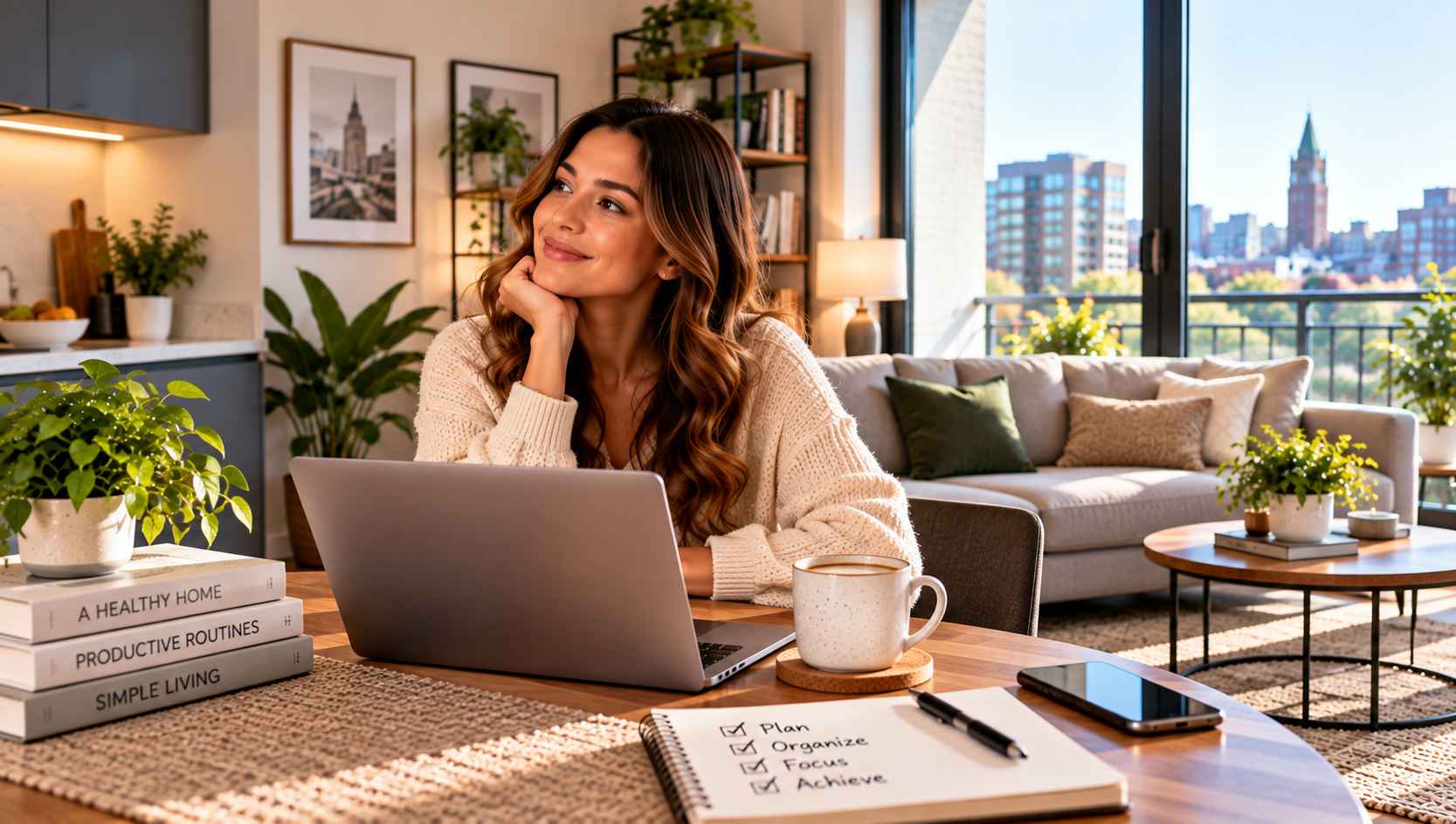
Daily routines often become easier when the home is arranged around the way people actually live. A morning can feel rushed when keys are difficult to find, work materials have no clear place, or the kitchen becomes cluttered before breakfast is even finished. The same apartment can feel much more manageable when its layout and furnishings support those everyday habits.
The good news is that improving your routine does not necessarily require a larger apartment or expensive changes. Small decisions about furniture placement, storage, lighting, and organization can make a meaningful difference in how a space feels and functions.
The starting point is to think about how you use your home from morning to night.
Start With the Way You Actually Live
Before rearranging furniture or buying storage products, pay attention to the routines that happen repeatedly.
Where do you usually put your keys when you arrive home? Where does your laptop go when the workday ends? Do you prepare most meals in the kitchen, or do you rely on quick and simple cooking? Is there a chair where you naturally read, relax, or scroll through your phone?
These details reveal where your apartment is already working well and where unnecessary friction is occurring.
Instead of trying to make every room serve every possible purpose, give each area a clear role. A corner near a window might become a reading area. A small section of a bedroom could function as a work zone. A console near the entrance can become a dedicated place for keys, mail, and everyday essentials.
The goal is not perfection. It is making the things you do regularly easier to accomplish.
Consider Location Before You Consider Décor
Your daily routine is influenced by more than what happens inside the apartment.
A convenient home can reduce the amount of time and effort spent travelling to work, buying groceries, using public transit, exercising, or handling basic errands. When comparing rental options, consider the routes you will actually use rather than simply looking at the neighbourhood name.
For example, a property that appears convenient on a map may feel very different once you consider your actual commute during busy periods. Check transit routes, driving times, walking connections, grocery stores, pharmacies, cafés, parks, and other places you regularly visit.
For renters comparing professionally managed apartments in Ottawa, location should be considered alongside layout, building upkeep, management, and proximity to everyday services. The right choice is ultimately the one that fits the renter’s routine rather than simply looking appealing in a listing.
Create a Morning Zone
Mornings tend to run more smoothly when frequently used items are easy to access.
Rather than keeping everything scattered throughout the apartment, create a simple morning zone. This could include a place for your coffee supplies, work bag, keys, shoes, and other items you use before leaving home.
An organized entryway can be particularly useful. Even a small area can accommodate a few hooks, a compact shelf, or a basket for items that would otherwise end up on a table or floor.
The same principle works in the bedroom. Keep frequently worn clothing accessible and avoid allowing laundry, accessories, and other items to accumulate on visible surfaces.
A few minutes of organization in the evening can make the following morning noticeably calmer.
Build a Work Area That Can Be Packed Away
Working from home can be challenging when the entire apartment begins to feel like an office.
If you do not have a dedicated room, create a defined work zone instead. A small desk, dining table, or carefully chosen corner can work as long as there is a clear distinction between work time and personal time.
Lighting matters here. Natural light can make a workspace feel more comfortable during the day, while a suitable task light can help when daylight is limited.
Keep work-related items together rather than spreading notebooks, chargers, documents, and equipment across the apartment. When the workday ends, having a simple system for putting those items away helps restore the room to its normal purpose.
This separation is especially useful in smaller apartments where one room may need to serve several functions.
Use Storage to Reduce Daily Decisions
Storage is not simply about hiding possessions. Good storage makes everyday decisions easier.
Think about what you use frequently and what you only need occasionally. Everyday items should be easy to reach, while seasonal clothing, rarely used equipment, and other infrequently needed belongings can be placed in less accessible areas.
Under-bed storage, baskets, shelving, drawer organizers, and furniture with built-in storage can help make better use of available space.
Try to avoid filling every storage area simply because space is available. When cupboards, drawers, and shelves become too full, finding things becomes difficult and putting them away becomes less appealing.
A useful rule is to keep the items you use most often within easy reach and give less frequently used belongings a specific home.
Make the Kitchen Work for Your Habits
The kitchen can either support a smooth routine or create unnecessary work.
Start by considering the meals you actually prepare. If you regularly make coffee in the morning, keep the coffee equipment and supplies together. If you frequently use an air fryer, blender, or other countertop appliance, consider where it can be stored or used without creating unnecessary clutter.
Keep commonly used cooking tools close to the areas where they are needed. Group similar items together instead of organizing cupboards solely by appearance.
Counter space is particularly valuable. Keeping unnecessary appliances, packaging, and rarely used objects off the counter can make food preparation easier and give the kitchen a cleaner appearance.
The best kitchen organization is usually based on frequency of use rather than creating a perfectly styled display.
Improve Lighting Throughout the Apartment
Lighting can change how comfortable and functional a space feels.
During the day, make the most of available natural light where possible. Avoid unnecessarily blocking windows with large furniture or heavy coverings.
At night, rely on several light sources rather than one bright fixture for the entire room. A floor lamp can provide general lighting, while a desk lamp or smaller table lamp can support specific activities.
Think about lighting according to the task. Reading, cooking, working, relaxing, and getting ready for bed do not necessarily require the same level of illumination.
A few thoughtfully positioned lamps can also help visually separate different areas in an open-plan apartment.
Create an Evening Reset
A productive apartment is not necessarily one that stays perfectly organized all day. What matters more is having a simple way to reset the space.
Before going to bed, spend a few minutes returning commonly used items to their designated places. Clear the kitchen counter, put away work equipment, prepare items for the following morning, and deal with obvious clutter.
This does not need to become an elaborate cleaning routine. The purpose is simply to prevent small amounts of disorder from accumulating into a larger task.
You can also use the evening reset to prepare for tomorrow. Put your keys in the same place, pack your work bag, choose clothing, or make a quick grocery note.
Small preparations can remove several decisions from the following morning.
Make Building Communication Part of Your Routine
The apartment itself is only one part of the living experience. The building, its management, and the way maintenance concerns are handled can also affect everyday convenience.
When you move into a rental, take some time to understand how to communicate questions or report issues. Keep important contact information somewhere easy to find, whether that is in your phone, a notes app, or a household document.
If something needs attention, raising it promptly is generally easier than allowing a minor concern to become a recurring inconvenience. Keep records of important communications when appropriate, particularly when you need to refer back to a previous request or discussion.
It is also worth becoming familiar with the practical features of the building, such as entrances, mail areas, waste and recycling arrangements, laundry facilities where applicable, and any other systems that affect your regular routine.
Make Small Spaces Feel Intentional
An apartment does not need to be large to feel comfortable.
In smaller spaces, furniture placement becomes particularly important. Avoid choosing pieces simply because they look attractive if they make movement difficult or occupy more space than necessary.
Leave clear paths through the apartment and consider how doors, drawers, cupboards, and windows are used.
Multi-purpose furniture can also be helpful. A dining table may become a temporary workspace, an ottoman may provide seating and storage, and a compact shelving unit can divide areas without making the apartment feel closed in.
The key is flexibility. Your apartment should be able to change with your routine rather than forcing your routine to work around the furniture.
Think About the Routine You Want to Keep
The best apartment setup is one that supports habits you can realistically maintain.
There is little benefit in creating an elaborate organization system that takes more effort to maintain than the original problem. Instead, focus on simple arrangements that make good habits easier.
Keep everyday items accessible. Give important belongings a consistent location. Separate work from relaxation where possible. Make frequently used areas easy to clean. Use storage according to actual needs rather than appearance.
If you are considering permanent changes to a rental, review your lease and speak with property management before making alterations.
Let Your Home Support Your Day
A comfortable apartment is more than a collection of furniture and decorations. It is the setting for hundreds of small routines that happen every week.
When your home reflects those routines, everyday tasks can become more straightforward. A well-placed storage basket can prevent entryway clutter. A dedicated work corner can make it easier to switch between professional and personal time. Better kitchen organization can simplify meal preparation. A consistent evening reset can make mornings less rushed.
You do not need a perfect apartment to create a better routine. Start with the space you have, identify where your day feels unnecessarily complicated, and make small changes that address those specific problems.
Over time, those simple adjustments can turn an ordinary rental into a home that feels more comfortable, organized, and genuinely suited to the way you live.